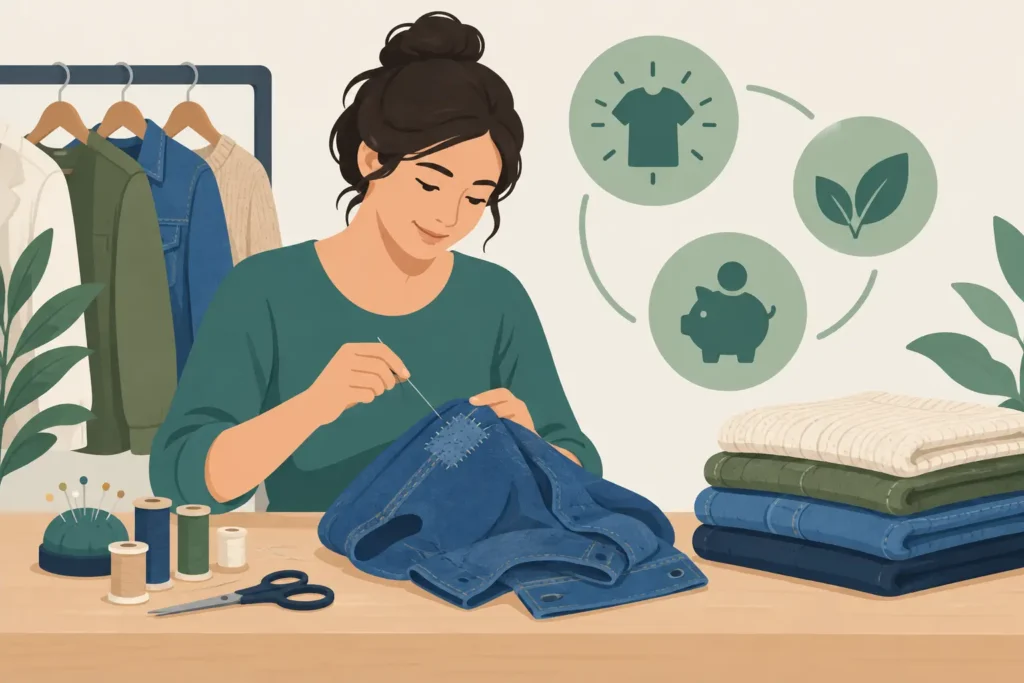
A loose hem on your favourite trousers, a missing button before a work meeting, or a zip that jams on a child’s school jacket can make an otherwise good garment feel unusable. Yet the clothing repair benefits are often far greater than simply getting another wear from one item. A timely repair can protect the fit, comfort and appearance of clothes you already know and love, while saving the cost and hassle of replacing them.
For busy Perth households, repairs are a practical part of caring for a wardrobe. They help office wear stay presentable, formal outfits stay ready for special occasions, and everyday clothing keep up with real life. The key is acting before a small issue becomes a larger one.
Clothing repair benefits for everyday wardrobes
Clothing is not disposable simply because it has a small fault. A dropped hem, split seam or loose hook is often a straightforward fix, particularly when the rest of the garment is in good condition. Repairing it gives you more value from the money you have already spent and reduces the pressure to find a replacement that fits just as well.
You spend less on replacements
Replacing clothing can be more expensive than it first appears. It is not only the price at the register. There is also time spent shopping, trying on alternatives and, quite often, settling for something that is close but not quite right.
A repair can be particularly worthwhile for quality work shirts, tailored trousers, wool jumpers, jackets and occasion wear. These garments are usually made from better fabrics and designed with a shape worth preserving. Reattaching buttons, repairing seams, replacing a zip or taking up a hem is often a far more economical choice than buying again.
It does depend on the garment. If fabric is badly worn, thinning in several places or permanently damaged by bleach, replacement may be the sensible option. Honest advice matters here. A good repair should leave the garment reliable enough to wear with confidence, not simply delay an unavoidable replacement.
Your best-fitting clothes stay in rotation
Fit is one of the strongest reasons to repair rather than replace. Many people have trousers that sit properly at the waist, a blazer that works perfectly for meetings, or a dress that feels right the moment it goes on. Finding that fit again can take time.
Minor alterations and repairs protect those dependable pieces. A waistband can be adjusted, a sleeve shortened, a hem secured or a lining repaired so the garment continues to feel comfortable. For families, this can be especially helpful with school uniforms and children’s clothes that need practical mending between growth spurts.
Keeping clothes in rotation also makes getting ready easier. When your reliable items are clean, pressed and repaired, your wardrobe works harder without needing to be bigger.
Repairs keep presentation sharp
Small faults are often more visible than people realise. A fraying cuff, loose button or crooked hem can affect how polished an outfit looks, even when it is freshly cleaned. This matters for office wear, uniforms, interviews, weddings and events where you want to feel comfortable and put together.
Professional repair work focuses on the details that make clothing look cared for: matching thread as closely as possible, reinforcing a weak seam, restoring a neat line at the hem and checking that closures sit correctly. It is careful work, but it has an immediate result. Clothes look intentional rather than tired.
The repairs that are worth arranging early
Most garments give a warning before they fail completely. Catching the problem early usually means a neater repair and less chance of further damage during washing or wear.
A loose thread at a seam, for example, can quickly become a visible split. A zip that catches may strain the surrounding fabric if it is forced. A hem that starts to drop can be trodden on, tearing more fabric away from the original stitching. Setting the item aside for repair as soon as you notice the issue is often the simplest approach.
Common repairs that can extend the life of clothing include button replacement, seam repairs, hemming, zip replacement, patching, fixing hooks and eyes, repairing small tears and mending loose linings. Alterations such as taking in a waist or shortening trousers can also turn a garment that has been sitting unworn into one you reach for regularly.
Delicate items need extra care. Silk, lace, beading, fine knitwear, lined formalwear and wedding garments can react poorly to rushed repairs or unsuitable handling. The right approach depends on the fabric, construction and location of the damage. A repair that suits sturdy denim may not suit a lightweight chiffon dress.
Why professional clothing repair makes a difference
A home sewing kit is useful for an emergency button, but not every job is suited to a quick fix. The challenge is not only stitching the damaged area. It is understanding how the garment is constructed and how to restore its shape without creating puckering, pulling or a visibly mismatched repair.
Fabric and finish need to be considered together
Garments often have hidden details that affect the repair: linings, stretch panels, interfacing, pleats, delicate trims or reinforced seams. A professional can assess the full garment before starting, rather than treating the visible problem in isolation.
This is particularly valuable for structured clothing such as suit jackets, dresses and coats. Repairs need to respect the garment’s original drape and movement. On everyday items, the same attention helps prevent a repaired seam from feeling stiff or uncomfortable against the skin.
Cleaning and repair can work hand in hand
Sometimes a garment needs more than stitching. A mark may need professional stain treatment before the repair is completed, or an item may benefit from pressing after a hem or seam has been restored. Handling these steps together helps the finished garment look fresh rather than merely mended.
For clothes that require dry cleaning, it is wise to mention any weak areas, stains or damaged trims before cleaning. This allows the garment-care team to choose a suitable process and avoid putting further stress on a problem area. Clear communication is especially useful for sentimental garments, formalwear and pieces with special care labels.
Make clothing repairs part of your routine
Repairs are easiest to manage when they are not left until the morning you need the garment. A quick wardrobe check every few months can help you spot loose buttons, worn hems and small tears before they become urgent.
Keep a small pile or bag for items that need attention rather than returning them to the wardrobe unworn. When you have a few pieces ready, arranging repairs alongside dry cleaning, laundry or ironing can save an extra trip and help restore several garments at once.
Before handing over an item, point out the fault and explain how you use the garment. Let the repairer know if it is needed for work, a school uniform, a wedding or regular weekend wear. This helps them understand what matters most, whether that is a discreet finish, added reinforcement or a particular turnaround time.
When replacing a garment may be the better choice
Repairing clothes is sensible, but it is not always the answer. If the fabric has become very thin, there are repeated holes in high-wear areas, elastic has lost all recovery, or extensive staining cannot be removed, a repair may not offer good long-term value.
The same applies if the garment no longer suits your needs or cannot be altered without changing its overall shape. A practical repair decision balances cost, condition, comfort and how often you will genuinely wear the item. The aim is not to keep every garment forever. It is to care properly for the pieces that still have plenty to give.
A well-repaired garment is one less thing to replace, one less rushed shopping trip and one more dependable outfit ready when you need it. For Perth households juggling work, family and full wardrobes, Petal Fresh Dry Cleaners can help make that care feel simple, with thoughtful repairs that keep the clothes you rely on looking their best.