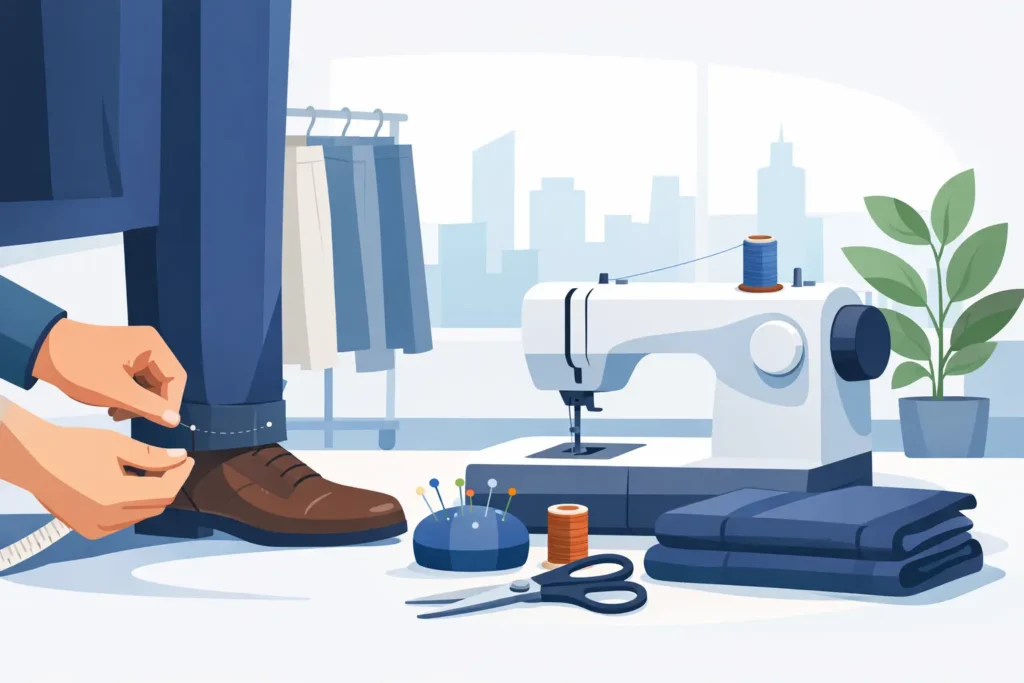
A trouser hem that sits a few centimetres too low can change the look and feel of an otherwise well-chosen outfit. It can bunch over your shoes, collect dirt around the cuffs and make walking less comfortable. A professional trouser hemming service Perth residents can rely on brings the length back into proportion, so your trousers look considered rather than simply bought off the rack.
For busy Perth households and professionals, hemming is one of those small jobs that is easy to put off. The right alteration, however, can make office trousers sharper, extend the life of school or sports uniforms, and turn a sale find into a garment you reach for every week.
Why trouser length deserves proper attention
Trouser length affects more than appearance. When fabric constantly catches beneath a heel or drags across the footpath, the cuff can fray quickly. On lighter-coloured fabrics, the lower leg may also show marks sooner. A well-finished hem helps protect the garment while giving you a cleaner line from waist to shoe.
The best length depends on the trouser style, the fabric and how you wear it. Tailored wool trousers for the office generally need a different finish from relaxed linen pants, wide-leg trousers or denim. Footwear matters too. The same pair of trousers can look right with flats and noticeably short with heeled boots.
That is why simply measuring another pair of trousers is not always enough. A professional alteration is based on how the garment sits on your body and the shoes you plan to wear most often.
What happens during a trouser hemming service in Perth
A quality hemming service starts by checking the garment, its existing hem and its care label. The tailor or alterations specialist considers the fabric weight, the shape of the leg and whether there are details that need to be retained, such as a cuff, original denim stitching, lining or a side split.
The trousers are then marked at the agreed length. Ideally, try them on with the shoes you will usually wear with them. Stand naturally rather than stretching or looking down at the cuff, as this can alter how the fabric falls. For several pairs intended for different shoes, it may be worth discussing separate hemming lengths.
After the fabric is adjusted, the hem is pressed and finished to suit the garment. This is where experience matters. Fine suit fabric, stretchy work trousers, heavy denim and delicate formalwear do not respond well to the same method. A neat, secure finish should sit flat, hold through regular wear and preserve the original look wherever practical.
At Petal Fresh Dry Cleaners, clothing alterations are handled with the same care given to cleaning and pressing. It is a practical way to have garments refreshed, repaired and fitted for wear without adding another errand to your week.
The right break for tailored trousers
In tailoring, the ‘break’ is the small fold created where the trouser hem meets the shoe. There is no single correct choice, but there are useful guidelines. A full break has more fabric resting on the shoe and can suit traditional business trousers. A slight break gives a neat, modern shape, while no break leaves a clean gap above the shoe and is often chosen for slim-cut or cropped styles.
Personal preference should lead the decision. If you are on your feet all day, comfort and movement matter as much as the mirror test. If the trousers are for a wedding, interview or formal event, bring the planned footwear when having them fitted.
Trousers that commonly need hemming
Hemming is not limited to formal trousers. Ready-to-wear clothing is produced in standard lengths, so many people need a small adjustment even when the waist and seat fit well.
Office trousers often benefit from a precise hem that works with loafers, heels or dress shoes. Jeans may need shortening while preserving the original look at the cuff. School trousers can be hemmed with room to let down later as a child grows, depending on the garment’s construction and available fabric. Wide-leg pants need careful measuring because a hem that is too long may catch under the shoe, while one that is too short can interrupt the intended drape.
Uniform trousers are another common request. For salons, hospitality teams, sporting clubs and other workplaces, consistent lengths help staff look tidy and feel comfortable through long shifts. When multiple garments need attention, a professional service can provide a more reliable result than trying to manage each pair at home.
When a simple hem is not the full answer
Sometimes shortening the leg is straightforward. Other times, the alteration needs a closer look. Tapered trousers may need the hem reshaped after length is removed, particularly if a substantial amount is being taken up. Trousers with zips, vents, cuffs or decorative trim can also require more detailed work.
Lined trousers deserve special care, as both the outer fabric and lining need to sit correctly. With high-end wool, silk blends or formal garments, an incorrect stitch, excess heat or poor pressing can leave marks that are difficult to reverse. In these cases, professional handling is the safer choice.
It also depends on how much length needs to come off. Removing a small amount usually maintains the original proportions. Taking up a large amount may change the position of the knee, flare or taper. Honest advice before the work begins helps you decide whether hemming is worthwhile or whether another size or style would suit better.
Preparing for your fitting
A little preparation makes the result more accurate. Bring or wear the shoes you expect to pair with the trousers most often. Empty the pockets and wear the type of undergarments you normally would, particularly with fitted formalwear. If you are dropping off several garments, identify which shoes or occasions each pair is for.
Be clear about whether you prefer a traditional longer line, a neat slight break or a cropped finish. If you are unsure, ask for guidance rather than guessing. A good alterations service will explain what is practical for the cut of the garment and help you avoid a length that looks right only while standing still.
Before leaving the trousers, check that the waist and rise are comfortable. Hemming fixes the length, but it cannot solve every fit issue. In some cases, adjusting the waist, repairing a zip or reinforcing a worn seam at the same time can make an older favourite pair feel ready for regular wear again.
Why DIY hemming can be a false economy
Iron-on hemming tape can be useful for a short-term fix before an event, but it is rarely the best answer for trousers you wear often. Tape may loosen with washing, create stiffness around the cuff or leave adhesive residue. It can also be unsuitable for delicate fabrics and garments that need dry cleaning.
Hand stitching works for some people, yet achieving an even line on both legs takes patience and practice. Machine stitching can be more durable, but it is easy to remove too much fabric, create a puckered edge or use thread that does not match. Once a trouser leg has been cut too short, there may be little or no fabric available to correct it.
Professional hemming is a modest investment in a garment you already own. It can help you get more wear from quality clothing, reduce unnecessary replacement purchases and feel more confident every time you get dressed.
Convenience matters when your wardrobe is busy
The value of an alteration is not only in the stitching. It is also in being able to get the job done without disrupting work, school runs or weekend plans. For Perth customers managing a full laundry basket as well as a crowded calendar, collection and delivery can make routine garment care far easier.
Combining trouser hemming with dry cleaning, pressing or repairs is particularly helpful before a holiday, important meeting or special occasion. Rather than collecting garments from several places, you can have your clothing cared for as a whole – cleaned, adjusted, finished and returned ready to wear.
A properly hemmed pair of trousers should not draw attention to itself. It should simply sit well, move comfortably and let you focus on where you are going. When a favourite pair is nearly right, a careful alteration can make all the difference.