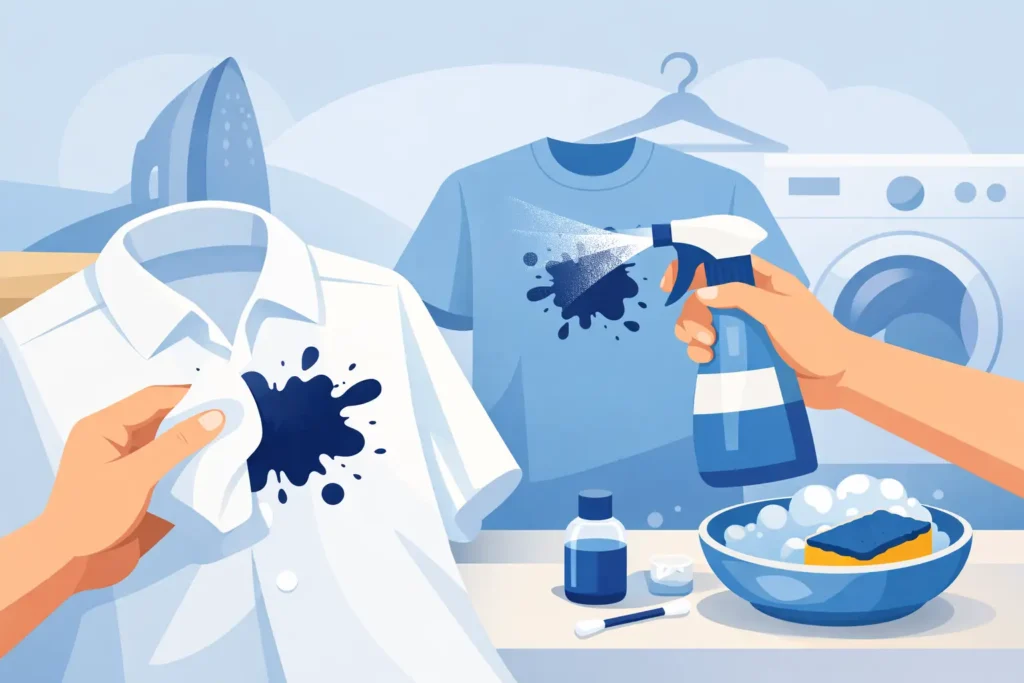
A pen leak in a shirt pocket can turn a polished work outfit into a stressful morning. The good news is that knowing how to remove ink stains quickly and carefully can often save the garment. The key is to treat the mark as a stain, not a scrubbing job: ink spreads easily, and the wrong product can set it deeper into the fibres.
Whether it is blue biro on a school uniform, black ink on office wear or a mystery mark on a favourite blouse, start by checking the care label. Fabric type, garment colour and the ink itself all affect the safest approach.
How to remove ink stains: act before they dry
Fresh ink is usually easier to lift than ink that has been through a wash, tumble dryer or ironing process. As soon as you spot the mark, place a clean white cloth or paper towel behind it. This gives the ink somewhere to transfer instead of soaking through to the other side of the garment.
Blot the stain gently from the outside towards the centre. Do not rub. Rubbing pushes ink through the fabric, enlarges the stain and can leave a faded-looking ring around it. Replace the paper towel or move to a clean section of cloth as ink transfers.
Avoid hot water at this stage. Heat can make certain inks more difficult to remove, particularly after the garment has dried. It is also wise not to put the item in the dryer until you are certain the stain is gone. A dryer can permanently set what remains.
First, identify the fabric and ink
Most everyday pen marks are ballpoint ink, which is oil-based and often responds to an alcohol-based treatment. Water-based ink from a felt-tip pen, rollerball or washable marker may lift more readily with cool water and a gentle detergent. Permanent marker is more unpredictable and is best treated with extra care.
The garment matters just as much as the pen. Cotton shirts, polyester uniforms and durable denim can usually tolerate more careful spot treatment than silk, wool, linen blends, velvet, leather, suede or garments with beading, sequins and delicate trims.
Dark, bright and patterned fabrics require caution too. Before using any treatment product, test it on a hidden area such as an inside seam or hem. If colour transfers to your cloth, or the area goes dull, stop. The risk of a permanent pale patch may be greater than the benefit of home treatment.
For washable cotton, polyester and sturdy blends
After blotting excess ink, apply a small amount of rubbing alcohol or alcohol-based hand sanitiser to a clean white cloth or cotton bud. Dab it onto the stain rather than pouring it directly onto the garment. Keep the paper towel underneath, and work patiently while the ink transfers down into it.
Once the transfer slows, rinse the treated area from the back of the fabric with cool water. Apply a small amount of liquid laundry detergent, gently work it in with your fingers and leave it for around 10 minutes. Then wash the garment according to its care label.
Check the item in good light before drying. If you can still see the ink, repeat the treatment or seek professional help. Drying a partly removed ink stain is one of the most common reasons a removable mark becomes a lasting one.
For water-based ink
Hold the stained section under a gentle stream of cool running water, with the reverse side of the stain facing the water. This helps flush ink out rather than driving it further in. Follow with liquid detergent and a normal wash if the care label permits it.
If a trace remains, a small amount of alcohol on a hidden-test area may help. Different pens use different formulas, so there is no single solution that works for every water-based mark. A measured approach protects the garment better than repeatedly adding stronger products.
For delicate, dry-clean-only or sentimental items
If the label says dry clean only, resist the temptation to experiment with alcohol, detergent, hairspray or stain sprays. Silk can water-mark, wool can lose its finish, and dyes can run or lighten unexpectedly. Wedding dresses, formalwear and tailored jackets are also best left untreated at home beyond very gentle blotting.
Keep the garment dry where possible, avoid heat and point out the location and cause of the stain when handing it over. The more detail a garment-care professional has, the better they can choose a fabric-appropriate treatment.
What not to use on ink stains
A few popular home remedies can create more work than they solve. Hairspray was once commonly suggested because older formulas contained more alcohol, but modern varieties often include conditioners, oils or resins that can leave their own mark. It is not a reliable choice for clothing.
Bleach is another poor first response. It can alter the colour of a garment, weaken fibres and react unpredictably with coloured fabrics. Even on white items, bleach may not remove the ink itself and can leave yellowing or damage behind.
Be careful with acetone-based nail polish remover as well. It may dissolve some inks, but it can also damage acetate, modacrylic, coated fabrics, prints and synthetic fibres. Never combine cleaning products, and always work in a well-ventilated space if using an alcohol-based treatment.
When home treatment is worth trying
At-home stain removal is most suitable when the ink is fresh, the garment is washable, the fabric is sturdy and the mark is small. A cotton tee, a polyester school polo or a washable office shirt is often a reasonable candidate, provided you test first and avoid heat.
It is better to stop and arrange professional cleaning when the item is expensive, structured, delicate, dry-clean-only or emotionally important. The same applies if the ink has spread across a large area, has been ironed or dried, or has already resisted one careful attempt. More product and more rubbing rarely improve the result.
For busy Perth households, this is often the practical decision: protect the garment rather than spending an evening trying remedies that may affect the fabric finish. Petal Fresh Dry Cleaners can assess the fabric, stain type and care instructions, then use a treatment suited to the item rather than a one-size-fits-all method.
A calm response saves more clothes
Ink stains feel urgent, especially when they land on a white shirt just before work or on a child’s uniform after school. Still, calm and gentle action gives you the best chance of success. Blot, test any product on a hidden area, treat the stain without soaking the whole garment, and keep it away from heat until it has been checked.
If there is any doubt about the fabric or the item matters to you, put the pen aside, leave the stain alone after blotting and choose professional care. A little caution can preserve the colour, shape and confidence you expect from the clothes you wear.