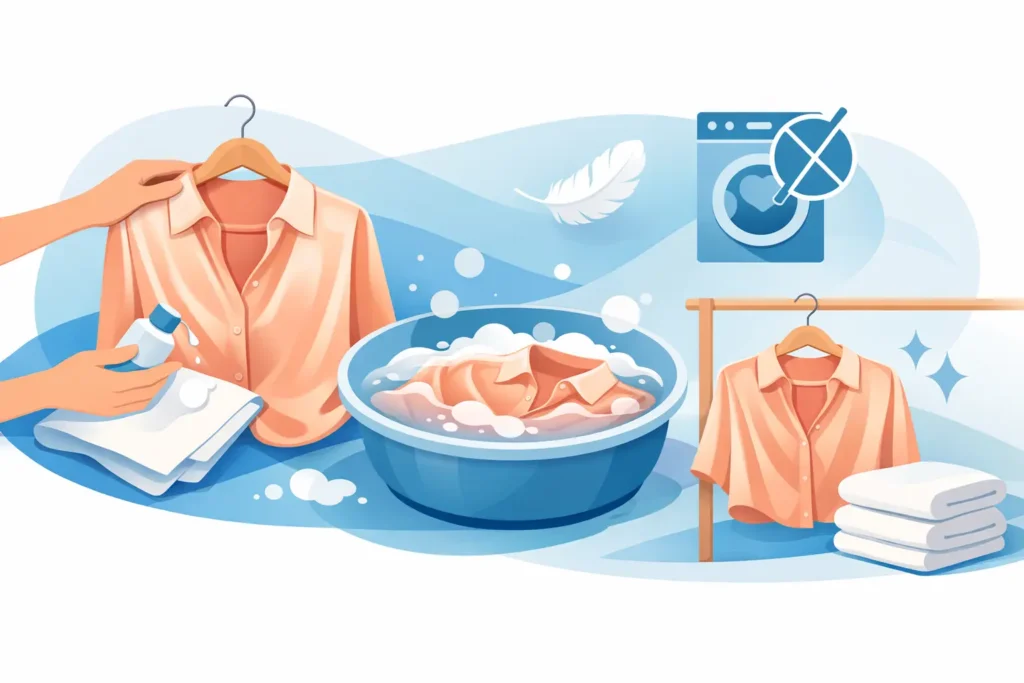
A silk blouse can make an ordinary work outfit feel polished, but one splash of coffee or a rushed wash can leave it looking dull, marked or misshapen. Knowing how to clean a silk blouse starts with one simple rule: treat the care label as the final word. Silk varies greatly in weave, dye and finish, and a blouse labelled “dry clean only” should not be tested in the laundry sink.
For washable silk, gentle handling makes all the difference. The aim is to lift everyday soil while protecting the fabric’s natural sheen, soft drape and colour. Heat, friction and harsh products are the common culprits behind damaged silk, so slow down and keep the process simple.
Check the label before cleaning a silk blouse
Read the garment’s care label before doing anything else, including spot cleaning. If it says dry clean only, follow that instruction, particularly if the blouse is structured, lined, vividly coloured, embellished or made from a heavier silk such as dupion. These garments can react unpredictably to water and may shrink, pucker or lose their finish.
A label that says hand wash, gentle wash or washable silk gives you more flexibility, but it is still worth checking for hidden risks. Look at the underarm area, cuffs and neckline for body oils or deodorant marks, and inspect the blouse in good natural light for makeup, food or drink stains. Fresh marks are generally easier to treat than stains that have had time to set.
If the blouse is sentimental, expensive, vintage or needed for an important occasion, professional care is usually the safer choice. Silk is not the fabric to experiment on the night before a presentation, wedding or dinner.
What you need for washable silk
You do not need a cupboard full of products. In fact, fewer products mean fewer opportunities for residue, bleaching or colour change. Prepare a clean basin and use cool to lukewarm water, never hot water.
For a careful hand wash, have these items ready:
- A mild detergent made for delicates or silk
- A clean white towel
- A padded hanger or flat drying surface
- A cool iron and clean pressing cloth, if needed
Avoid standard laundry powder, bleach, enzyme-heavy stain removers and fabric softener. They can be too aggressive for silk fibres or leave a coating that affects the fabric’s feel. Do not use a coloured towel for drying, either, as dye can transfer while the blouse is damp.
How to hand wash a silk blouse safely
Fill a clean basin with cool or lukewarm water and add a small amount of mild detergent. Swirl the water gently to disperse the detergent before placing the blouse in the basin. It should be fully submerged, but there is no need to scrub, rub or twist it.
Let the blouse soak briefly, usually just a few minutes, then move it through the water with gentle hands. Pay quiet attention to the collar, cuffs and underarms, where oils tend to build up. Rather than rubbing the fabric against itself, lightly press the water through these areas.
Drain the soapy water and refill the basin with clean, cool water. Rinse the blouse by gently moving it through the water until the detergent is gone. Depending on the detergent and the amount used, this may take two rinses. Leftover soap can make silk feel stiff and attract dirt more quickly the next time it is worn.
Lift the blouse from the water with both hands, supporting its weight. Wet silk is more delicate than dry silk, and pulling it up by the shoulders or sleeves can stretch the garment out of shape. Never wring it out, even gently. Twisting is one of the quickest ways to create stubborn creases and distort the fibres.
Dry silk without causing water marks or stretching
Lay the blouse flat on a clean white towel and smooth it into its natural shape. Roll the towel and blouse together loosely, then press down to absorb excess water. Unroll it and place the blouse flat on a fresh dry towel or a mesh drying rack.
Keep silk away from direct sun, radiators and tumble dryers. Strong heat can shrink the fabric, fade colour and leave a rougher feel. A well-ventilated room is best. If you use a hanger, choose a padded one and only do so once the blouse is no longer heavy with water. Hanging a saturated silk blouse can pull the shoulders and side seams out of line.
As it dries, gently reshape the collar, placket, cuffs and hem. This small step helps the blouse dry neatly and reduces the amount of ironing needed later.
Remove stains from silk with care
When a stain happens, blot it straight away with a clean white cloth or paper towel. Press lightly to absorb the spill, working from the outside of the mark towards the centre. Do not rub. Rubbing can spread the stain and leave a lighter, fuzzy patch where the silk surface has been damaged.
Plain water may be enough for a fresh water-based spill, provided the care label allows washing. For anything oily, coloured or unknown, avoid home remedies. Perfume, wine, lipstick, makeup, cooking oil and ink all need different treatment, and the wrong product can set the stain permanently or remove dye from the blouse.
Be particularly cautious with vinegar, lemon juice, bicarbonate of soda and dishwashing liquid. These are often suggested as household fixes, but silk can react badly to acidic, alkaline or degreasing products. A stain may look better while wet, only to dry with a ring or faded area around it.
If you need professional help, avoid applying heat first. Do not iron over the mark, use a hairdryer or put the blouse in a dryer. Let the cleaner know what caused the stain and when it happened. That information helps them select the right fabric-specific treatment.
Can you machine wash a silk blouse?
Sometimes, but only when the label specifically permits it. A washing machine’s delicate cycle is gentler than a standard wash, yet it still creates more movement and friction than hand washing. The risk is higher for lightweight silk, loose weaves, blouses with buttons or trims, and garments that have already been worn heavily around the neckline and underarms.
If machine washing is permitted, turn the blouse inside out, fasten buttons, place it in a fine mesh laundry bag and wash it alone or with similarly delicate items. Select a cold, delicate cycle with a low spin and use only a small amount of detergent formulated for silk or delicates. Remove it promptly at the end of the cycle and dry it flat as described above.
Hand washing remains the more controlled option. It takes a few extra minutes, but it lets you support the fabric, avoid a long spin cycle and check the blouse as you clean it.
Ironing silk for a smooth finish
Silk is easiest to press when it is slightly damp. Turn the blouse inside out and set the iron to the silk or low-heat setting. Place a clean pressing cloth between the iron and the blouse, then use light, steady movements. Avoid holding the iron in one place, as even moderate heat can create shine marks or change the surface of the fabric.
Do not spray water directly onto silk while ironing. Some silks develop water spots, especially darker colours and satin finishes. If the blouse has delicate details, pleats or a tricky collar, steam from a short distance may help, but test a discreet area first.
For a crisp office-ready finish without the worry of heat marks, Petal Fresh Dry Cleaners can professionally clean and press delicate silk garments, with convenient collection and delivery across Perth.
When professional silk care is the sensible option
There is no prize for cleaning every garment at home. Professional care is a practical choice when the blouse is dry-clean-only, has an old or difficult stain, or needs to look its best for work or a special event. It is also worth considering when the silk has a lining, beading, contrasting panels or a label that is unclear.
A professional cleaner can assess the fabric, dyes and stain type before selecting a suitable process. Just as importantly, they can finish the blouse properly, so it is returned clean, neatly pressed and ready to wear rather than hanging in the laundry waiting for attention.
Silk rewards a little patience. Give your blouse cool water, minimal handling and time to dry naturally, and it will stay soft, bright and elegant through many wears.