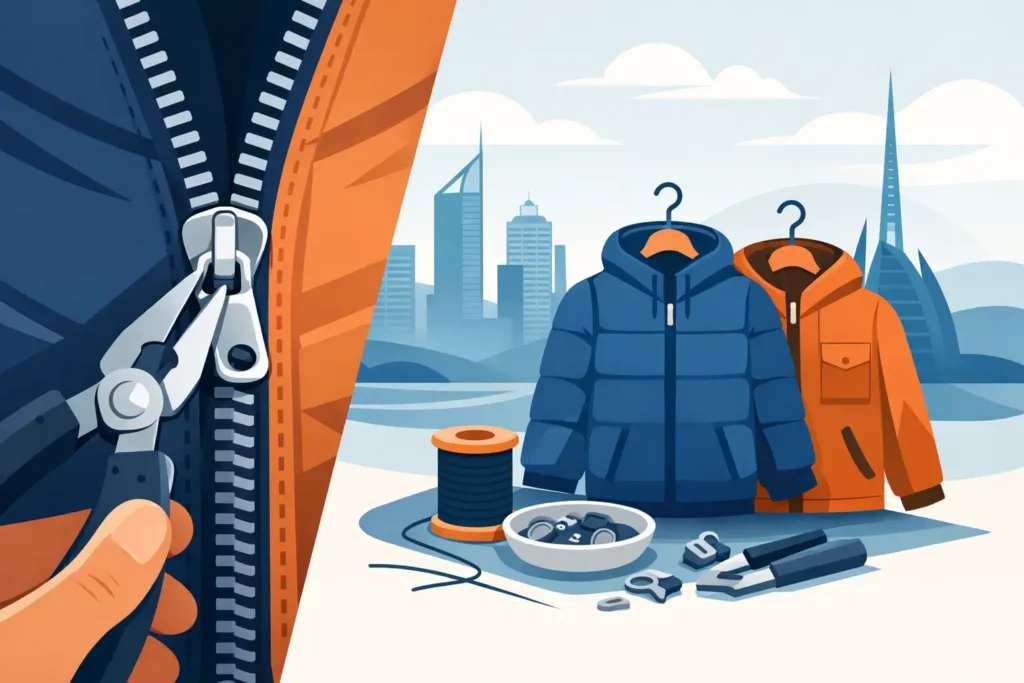
A jacket zip usually fails at the worst possible moment: halfway through a busy morning, before a weekend game, or just as the Perth weather turns cool and wet. The good news is that zip repair for jackets Perth customers need is often more straightforward than replacing a jacket you otherwise love. A careful assessment can show whether the fault is limited to the slider, a damaged stop, separated teeth or the zip tape itself.
The right repair is not about forcing a stubborn zip to work for another week. It is about restoring a smooth, secure closure while protecting the fabric, lining and shape of the garment. For a favourite puffer, work jacket, school jacket or tailored wool coat, professional attention can be the practical choice.
When a jacket zipper can be repaired
Not every broken zip needs a complete replacement. In many cases, the zip teeth are still in good condition and the issue is a worn slider. This small component is what brings the two sides of the zip together. Once it loosens through regular use, the teeth may appear to close but split open again underneath.
A skilled repairer may be able to fit a new slider, secure a loose top or bottom stop, or correct a small section where stitching has come away from the zip tape. These repairs can preserve the original zip and often keep the cost and turnaround more manageable.
A zip that catches can also have a simple cause. Dirt, lint or a bent tooth may be interfering with its movement. It is tempting to pull harder, especially when you are rushing out the door, but this can tear the tape or pull the lining into the mechanism. Stop using the zip if it is catching badly and have it checked before the damage spreads.
Signs the slider may be the problem
If the zip travels up and down but the jacket opens behind it, the slider is commonly the culprit. If the pull tab has broken off but the slider still closes the teeth correctly, a replacement pull may be possible. A slider that feels loose, sits crookedly or needs repeated attempts to engage is also worth inspecting before it damages the rest of the zip.
These are generally better repair scenarios than a zip with large sections of missing teeth. Even so, the best option depends on the jacket’s construction and the condition of the zip tape.
When zip replacement is the better choice
A full zip replacement is usually recommended when teeth are missing or bent along a significant section, the tape is torn, the bottom box on a separating jacket zip has cracked, or the zip has pulled away from fragile fabric. On a jacket that gets frequent use, replacement may also offer better long-term value than repairing a heavily worn original zip.
This is particularly relevant for puffer jackets, waterproof outerwear and lined coats. Their zips need to work smoothly without catching insulation, a storm flap or the lining. Replacing one involves more than sewing in a new zip. The old zip must be removed carefully, the new one measured and positioned accurately, and the layers stitched back without puckering or affecting the jacket’s fit.
Colour matching matters too. A black zip is not always simply black, and metal, nylon coil and moulded plastic zips all look and perform differently. Where an exact match is unavailable, a professional repairer can help select an option that suits the garment and is appropriate for how it will be worn.
Choosing the right zip for your jacket
The strongest zip is not automatically the best one. A heavy-duty metal zip can suit a leather jacket or sturdy workwear, while a lighter nylon coil zip may be more suitable for a soft shell, fleece or lightweight fashion jacket. A puffer jacket needs a zip that moves freely without adding unnecessary bulk or weight at the front.
Separating zips, which open fully at the bottom, need particular care. Their length, bottom box and pin must be right for the garment. A closed-end zip used in the wrong application will not provide the function your jacket needs, no matter how neat the stitching looks.
For jackets with a two-way zip, replacement is more specialised again. These zips are useful for long coats and fitted puffers because they allow movement and comfort when sitting or walking. They also require correct alignment at both ends, so this is not a repair to leave to guesswork.
Why a quick DIY fix can create a bigger repair
There is nothing wrong with trimming a loose thread or gently cleaning visible lint from a zip. But pliers, superglue and forceful pulling can turn a small issue into a more involved alteration.
Pliers may crush a slider too tightly, making the zip difficult to move. Glue can stiffen the tape, mark the fabric and interfere with the zip teeth. Trying to sew a zip back into place without opening the jacket lining correctly can leave visible stitching, uneven edges or a twisted front panel.
Care labels also matter. Jackets made from wool, silk blends, leather, waxed cotton or technical water-resistant fabrics need fabric-aware handling. Heat, unsuitable pressing and rough unpicking can affect the finish long before the replacement zip is installed. This is why a repair service that understands garment care, not just stitching, is a sensible choice for quality outerwear.
What to bring in for jacket zip repair
Bring the jacket clean where possible, especially if it has been worn for work, sport or outdoor activities. This helps the repairer inspect the zip, seams and lining properly. If there is a detachable bonnet, belt or lining that affects the front closure, include it as well.
When you hand over the garment, point out exactly what happens. Does the zip separate after closing? Is it jammed at one point? Has the pull broken, or is the bottom section damaged? A clear description helps identify whether the problem is isolated or whether there is strain elsewhere in the jacket.
It is also useful to mention how you use it. A school jacket, high-visibility work jacket and occasional formal coat each need a different balance of durability, appearance and cost. Honest advice should take the age and value of the garment into account. Sometimes a simple repair is ideal. Other times, a quality replacement zip will give the jacket a much longer working life.
Zip repair for jackets Perth customers can fit into a busy week
Getting a jacket repaired should not mean losing time you do not have. For busy households and professionals, the practical value is in having the garment assessed, repaired and returned ready to wear, rather than sitting at the bottom of a mending pile.
At Petal Fresh Dry Cleaners, jacket repairs can sit alongside the garment care your wardrobe already needs. If your jacket also needs cleaning, pressing or attention to a loose seam, dealing with it together helps ensure it comes back looking cared for from collar to cuff. Free collection and delivery across selected Perth areas can make the process even easier for households and workplaces managing a full week.
Turnaround depends on the repair required, the availability of a suitable zip and the garment’s construction. A slider repair may be relatively quick, while a full replacement on a lined puffer or technical jacket needs more careful work. It is better to allow the time needed for a repair that sits flat, closes cleanly and lasts.
Can a zip be fixed if teeth are missing?
It depends on where the damage is and how many teeth are affected. One damaged area near the top or bottom may sometimes be managed with a new stop. Missing teeth through the main length of the zip usually mean replacement is the more reliable option.
Is it worth replacing a zip on an older jacket?
If the fabric, insulation, lining and fit are still in good condition, it often is. A well-loved jacket that fits comfortably can be difficult and expensive to replace. For a garment that is worn out in several areas, an honest assessment can help you decide whether repair is worthwhile.
How can I help a repaired zip last longer?
Close the zip gently and make sure the two sides are correctly aligned before pulling it up. Keep the lining and loose threads clear, avoid overfilling jacket pockets that strain the front, and do not force the slider if it catches. Regular professional cleaning also removes the grime that can build around the zip and collar.
A failed zip does not have to mean the end of a good jacket. Give it the same care you would give a damaged hem, a missing button or a stubborn stain, and you may get many more comfortable Perth winters out of the garment you already trust.