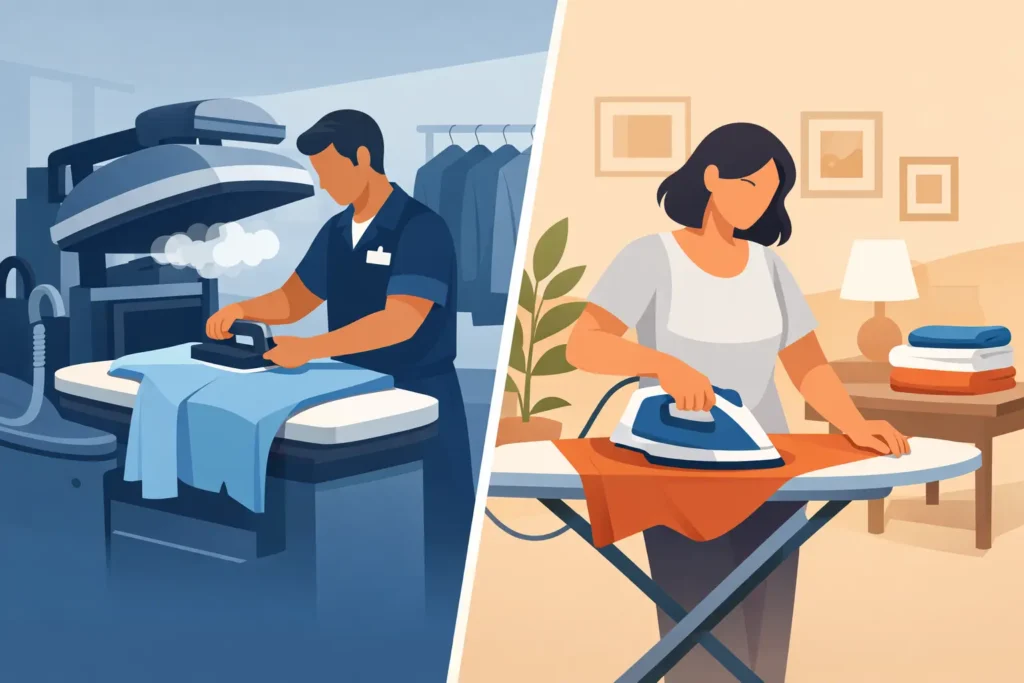
A shirt can be clean and still not feel ready to wear. A stubborn collar crease, shiny patch on dark trousers or wrinkled linen dress can change how an outfit looks before you have even left home. That is where professional pressing versus home ironing becomes more than a question of convenience. It is about how much time you have, what the garment is made from and how confident you need to feel when you put it on.
For many Perth households, home ironing is a practical part of the weekly routine. For others, especially busy professionals, families and anyone caring for delicate or formal clothing, professional finishing takes a task off the list while protecting the clothes they rely on. Neither option is automatically right every time. The best choice depends on the garment and the result you need.
What professional pressing does differently
Professional pressing is not simply a larger iron used at a faster pace. Garments are assessed for their fabric, construction, care label and areas that need particular attention. The pressing method can then be matched to the item, using controlled heat, moisture and pressure to shape fabric without flattening the details that give a garment its fit.
A tailored jacket, for example, needs more than a quick pass over the front. Lapels, seams, sleeve heads and linings need careful handling so the jacket retains its structure. Similarly, pleated skirts, blouses with fine detailing and trousers with a sharp crease benefit from an even finish that is difficult to achieve on a standard ironing board.
Professional equipment also produces steam and pressure more consistently than most household irons. This helps remove wrinkles efficiently while reducing the temptation to keep going over the same spot. Repeated heat is one of the most common causes of scorching, shine and weakened fibres at home.
At Petal Fresh Dry Cleaners, pressing can be part of a complete garment-care service, so clothes can be cleaned, checked, finished and returned ready for the wardrobe. That is particularly useful when a pile of office shirts, school uniforms or event wear has built up faster than the weekend allows.
Professional pressing versus home ironing: the real differences
The clearest difference is consistency. A home iron can produce excellent results in capable hands, particularly on straightforward cotton items. But professional pressing is designed to deliver an even finish across a larger volume of garments, including awkward areas such as cuffs, collars, pockets and curved seams.
Time is the other major factor. Ironing one shirt may take only a few minutes, but sorting garments, setting up the board, filling the iron, working through a basket and packing everything away can take a sizeable part of an evening. If ironing routinely gets pushed aside, outsourcing it can be an affordable way to keep weekday mornings calmer.
There is also a fabric-care difference. Household irons usually offer broad settings such as cotton, wool and synthetic. Those settings are useful, yet they do not account for every blend, finish, lining or embellishment. Professional garment care is more considered, which matters for silk, wool, viscose, linen, velvet, formalwear and pieces with delicate trims.
Cost should be weighed honestly too. Home ironing costs less in direct dollars when you already own the equipment, and it makes sense for casual T-shirts, tea towels and simple cotton clothes. Professional pressing costs more per item, but it can save time, reduce the risk of replacing damaged clothing and help valuable garments stay presentable for longer.
When home ironing is a good choice
Home ironing is still the sensible option for plenty of everyday loads. Freshly washed cotton tops, simple shorts and a small number of school garments can be managed well at home, especially when they are ironed while slightly damp or soon after drying.
It is most effective when you have a clean soleplate, a stable board with a good cover and enough time not to rush. Follow the care label, start with a lower temperature when unsure and test an inconspicuous area on unfamiliar fabrics. Turning dark garments inside out and using a pressing cloth for delicate materials can help prevent unwanted shine.
The limitation is not that home ironing is poor quality. It is that it asks for your attention, skill and time every single week. If you enjoy the routine, that may be worthwhile. If it becomes another unfinished chore, there is a practical alternative.
Garments that deserve extra care
Some pieces are higher risk because heat and pressure can permanently alter their appearance. Wool can develop shine or lose its shape. Silk may water-mark or scorch. Linen can look beautifully crisp but often needs careful moisture and handling to avoid harsh, uneven creases. Synthetic fabrics may melt or develop a glossy finish if the iron is too hot.
Structured and sentimental items deserve the same caution. Wedding dresses, suits, evening gowns, designer pieces, uniforms with printed logos and clothing with beading, sequins or fine lace should not be treated like a basic cotton shirt. Even when the fabric itself seems safe, the lining, adhesive interfacing or decorative details may not be.
Curtains are another example. They can hold dust and crease heavily, but their size and fabric weight make them difficult to press safely at home. Professional cleaning and finishing can be a more manageable option than trying to balance metres of fabric around an ironing board.
Signs it is time to outsource the ironing
If collars remain soft after ironing, trouser creases will not hold, or you keep finding shiny marks on darker fabrics, the issue may be technique or equipment rather than effort. It may also be time to seek professional help if garments need frequent pressing for work, an upcoming wedding or a formal event.
Outsourcing is especially useful after holidays, during busy work periods, before guests arrive or when family laundry is piling up. A regular service can make sense for households that want crisp workwear without giving up their evenings. For businesses, including salons, sporting clubs and short-stay accommodation providers, dependable finishing helps staff and linen look consistently well cared for.
Better results start before the iron
Whether you press at home or use a professional service, preparation affects the final result. Do not leave clothes crumpled in a laundry basket after drying. Hang shirts and dresses promptly, smooth out seams by hand and avoid overloading the wardrobe, where creases can return quickly.
Stains should be treated before pressing wherever possible. Heat can set certain marks, making them harder to remove later. If you are unsure what caused a stain or how a fabric will react, avoid experimenting with strong products or high heat. Set the garment aside for advice rather than risking permanent damage.
For clothing that needs a polished finish, consider the full journey rather than only the last crease. Proper cleaning, careful drying, minor repairs and professional pressing all work together. A loose button, frayed hem or stained cuff can still distract from an otherwise perfectly pressed outfit.
Choosing the option that suits your wardrobe
Think about the clothes you wear most, not only the size of this week’s ironing pile. If your wardrobe is mostly casual, washable cotton and you have time to keep on top of it, home ironing may be all you need. If it includes business shirts, tailored trousers, delicate dresses or garments that must look sharp day after day, professional pressing can offer better value than its per-item price suggests.
A mixed approach often works best. Handle easy, low-risk items at home and reserve professional care for the pieces that matter most, the loads that take too long or the weeks when life is simply full. Free collection and delivery can make that choice even easier for Perth households that would rather spend their spare time with family, at work or doing something they actually enjoy.
Clothes do not need to be saved for a special occasion to deserve careful finishing. A crisp shirt for Monday, a clean school uniform or a favourite dress ready at short notice can bring a little more ease to an ordinary day.