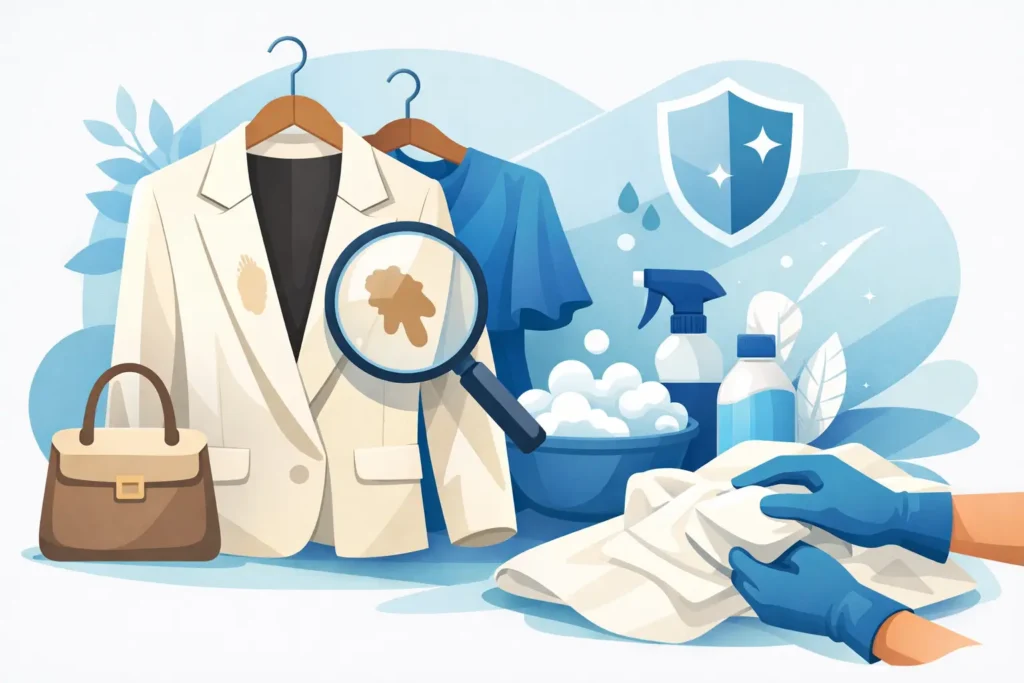
A splash of red wine on a silk blouse or a mark on a tailored wool jacket can make an ordinary day feel expensive very quickly. Designer clothing stain removal is not simply about making a spot disappear. It is about protecting the fabric, colour, shape and finish that made you choose the garment in the first place.
The urge to fix the problem immediately is understandable. Yet a home remedy that works on a cotton T-shirt can permanently damage a delicate dress, a structured blazer or a garment with hand-finished details. The safest response is usually calm, gentle action followed by professional advice when the item is valuable, delicate or labelled dry-clean only.
Why designer garments need a different approach
Designer clothing often combines materials and construction methods that need careful handling. A single garment may include silk lining, wool outer fabric, leather trim, embroidery, metallic thread, beadwork or a bonded finish. Each element can react differently to moisture, heat and cleaning products.
Care labels matter, but they are only one part of the picture. A label may say dry clean only because the garment can shrink, lose its texture or become misshapen in water. It may also be because the dyes are prone to running, the lining and outer fabric respond differently, or the embellishments cannot withstand normal washing.
The stain itself also changes the treatment. Oil-based makeup, coffee, ink, perfume, grass and food stains all need different methods. Applying the wrong product can set the stain, leave a pale ring, strip dye or alter the feel of the fabric. This is why careful assessment comes before cleaning.
What to do as soon as a spill happens
Fast action can improve the result, but vigorous action rarely does. Start by blotting the affected area with a clean white cloth or plain paper towel. Press gently to lift excess liquid. Do not rub, as rubbing pushes the stain further into fibres and can roughen delicate surfaces such as silk, velvet or fine wool.
If there is a solid substance, such as food or mud, carefully lift away what you can with the edge of a spoon or a blunt card. Avoid scraping hard. For oily spills, resist the temptation to add water straight away. Water may spread the mark, especially on fabrics with a delicate finish.
Keep the garment away from heat. Do not use a hairdryer, place it in the dryer or iron over the stained area. Heat can make many stains far harder to remove and may permanently set oils, proteins and dyes into the fabric.
If you need to transport the item, hang it where possible or lay it flat with the stained area protected by a clean white cloth. Tell your cleaner what caused the stain and when it happened. Even small details, such as whether a mark came from lipstick, salad dressing or a pen, help determine the most suitable treatment.
Designer clothing stain removal: what not to try at home
Online cleaning tips can make stain removal look easy, but many are too broad for premium clothing. White vinegar, bicarbonate of soda, dishwashing liquid and stain sprays can be useful on some washable household items. They are not automatically safe for designer garments.
Avoid applying bleach, even on white fabric. Bleach can weaken fibres, turn whites yellow and damage trims or stitching. It is particularly risky on silk, wool and garments with stretch fibres. Likewise, avoid using coloured cloths or printed paper towels, which can transfer dye when damp.
Perfume, deodorant and makeup marks are often treated with alcohol-based products at home. On some fabrics, that can leave a faded patch or a visible tide mark. Suede, leather, velvet, sequins, acetate and satin deserve extra caution because their surface can change easily.
Spot-cleaning may be reasonable for a simple, fresh stain on a sturdy washable fabric, provided the care label allows it and you test a hidden area first. But when the garment is expensive, sentimental, tailored or made from delicate fibres, the trade-off is rarely worth it. A small visible stain is usually easier to treat than a larger area affected by an unsuitable cleaning product.
How professional garment care protects the details
Professional cleaning is not one standard process applied to every item. A garment-care team assesses fabric composition, stain type, dye stability, embellishments, care instructions and previous treatment attempts. From there, the cleaning method is chosen to suit the garment rather than forcing the garment through a generic wash.
This may involve controlled spot treatment before cleaning, specialist dry-cleaning methods, gentle wet cleaning or hand finishing. The aim is not only stain reduction but also preserving colour, drape, texture and shape. A tailored jacket, for example, needs to return looking sharp through the shoulders and lapels, not merely clean.
Finishing matters just as much. Incorrect pressing can leave shine on wool, flatten velvet, mark seams or disturb delicate details. Careful steaming, pressing and inspection help a designer piece look ready to wear again.
No cleaner can honestly guarantee that every stain will vanish completely. Some marks have been sitting too long, have altered the dye, or have already been set by heat or home treatment. Honest advice is part of quality care. A professional should explain the likely outcome and treat the item with the best available method rather than taking unnecessary risks.
Common stains and the decisions behind treatment
Red wine, berries and tomato-based sauces can leave strong colour stains, particularly on pale silk, linen and cotton. The sooner these are assessed, the better. Do not add salt or hot water, as popular as those remedies may be, because they can complicate treatment on delicate materials.
Oil and grease from food, cosmetics or bicycle chains can be deceptive. The mark may look faint at first, then darken after washing or pressing. These stains generally need targeted treatment before a full clean, which is one reason it helps to point them out when dropping off a garment.
Ink deserves prompt attention but a gentle response. Rubbing can spread it into a much wider mark, while solvents can affect dye and finishing. Keep the area dry where possible and let a specialist identify the ink type and fabric before treatment.
Perspiration and deodorant marks may appear as yellowing or stiffness under the arms. These can build up over time and may weaken fabric if left untreated. Regular professional cleaning for office shirts, dresses and jackets can help prevent the marks becoming more difficult to address.
Make stain care part of looking after your wardrobe
A well-kept wardrobe starts with small habits. Hang garments after wearing so moisture can air out, avoid overfilling your wardrobe, and address stains before they have weeks to settle. For formalwear and occasion pieces, arrange cleaning soon after the event, even if the garment looks clean. Invisible spills, body oils and perfume can oxidise over time and become visible later.
Store clean garments in a cool, dry place and avoid long-term plastic covering, which can trap moisture. Use the right hanger for structured jackets and dresses so shoulders keep their shape. If a hem comes loose, a button is missing or a seam begins to pull, arrange a repair early rather than waiting for a minor issue to become a larger one.
For busy Perth households, professional care can also remove the pressure of finding time to sort, treat, wash and press special garments correctly. Petal Fresh Dry Cleaners provides fabric-specific care with convenient collection and delivery, so your clothing can come back fresh, finished and ready for the week or the next occasion.
When a favourite designer piece is stained, treat it gently, keep it away from heat and share the details of the spill early. That simple approach gives the garment its best chance of returning to your wardrobe looking like itself.