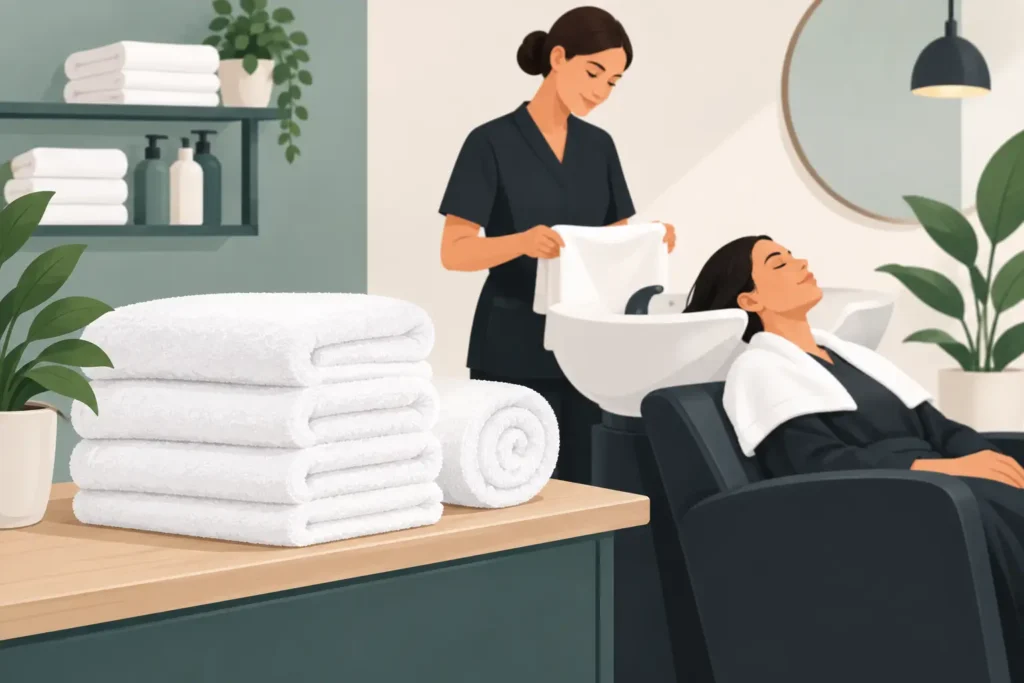
A warm, clean towel is a small detail clients remember. It sits against the neck during a colour service, wraps around freshly washed hair and helps make a busy appointment feel considered. Consistent salon towel care is therefore about more than getting laundry done. It protects hygiene, presentation, staff workflow and the quality of every client experience.
For salons across Perth, towels work hard. They absorb water, shampoo, colour, toner, oils and styling products every day. Without a reliable cleaning routine, even good-quality towels can quickly become stiff, stained, musty or unpleasant to use. The right approach keeps linen soft, fresh and ready for the next appointment without creating extra pressure on your team.
Why salon towel care deserves attention
Clients may not ask how towels are laundered, but they notice the outcome. A towel that feels rough, smells damp or carries visible colour marks can undermine an otherwise polished service. On the other hand, clean and absorbent towels support the calm, professional environment clients expect when they book with your salon.
Good towel care also makes financial sense. Replacing towels too often is expensive, particularly for busy salons with a high volume of wash basins, treatments and colour services. Regular, fabric-appropriate washing can help preserve fibres, maintain absorbency and reduce the need for frequent replacement.
There is also a practical staff benefit. When fresh towels are consistently available, your team can stay focused on clients rather than sorting loads, treating stains or waiting for a dryer to finish. For smaller salons, this can make a genuine difference during a full day of bookings.
Separate towels before the stains settle
The most useful towel-care habit happens before laundry begins. Used towels should go into dedicated, well-ventilated laundry bins as soon as possible. Leaving damp towels bundled in a corner or sealed in a plastic bag encourages odour and mildew, especially in Perth’s warmer weather.
Keep colour-stained towels separate from lightly used white or pale towels. This makes it easier to treat the right loads without transferring colour residue or relying on harsh processes for every towel. It is also wise to separate towels used for chemical services from those used for drying clean hair or client comfort.
If a towel has a fresh product spill, act early where practical. Blot excess colour, bleach, tint or oil rather than rubbing it further into the fabric. Avoid using random spot-cleaning products from the cupboard, as some can set stains or weaken fibres. The best treatment depends on the product involved and the towel’s fabric blend.
Wash for hygiene without wearing out the fibres
It can be tempting to wash every load on the hottest, longest setting. High heat may feel like the safest choice, but repeated aggressive laundering can fade towels, make them coarse and shorten their usable life. The care label should always guide the wash temperature and product choice.
A quality commercial detergent used at the correct dose is usually more effective than simply adding extra detergent. Too much detergent can leave a residue behind, which makes towels feel stiff and reduces their ability to absorb water. This residue can also hold onto product build-up and leave towels looking dull.
Fabric softener needs particular care in a salon setting. While it may make towels feel soft initially, it can coat fibres and reduce absorbency over time. That is not ideal for hair towels that need to dry efficiently. If softness is becoming a problem, the cause may be detergent build-up, over-drying or ageing fibres rather than a lack of softener.
For towels with persistent colour, toner or product staining, standard home-style washing may not be enough. Professional laundering allows for more targeted stain treatment and controlled washing methods, helping to lift marks while protecting the towel fabric where possible. Some stains, particularly bleach-related marks, are permanent, so it is worth setting realistic expectations before a load is treated.
Avoid overloading the machine
An overloaded washer cannot circulate water and detergent properly through the towels. The result is uneven cleaning, lingering residue and towels that come out with a dull or heavy feel. Smaller, correctly sorted loads are more reliable, even if they require more planning.
The same applies to dryers. Towels need enough room for warm air to circulate. Stuffing the dryer can leave centres damp, creating odour issues and forcing staff to run the load again.
Drying and folding for a fresh finish
Towels should be dried promptly after washing. Leaving them wet in the machine for hours can create a musty smell that is difficult to remove and immediately noticeable to clients. Dry thoroughly, but avoid pushing drying time further than needed, as excessive heat can make fibres brittle and reduce softness.
Once dry, fold towels neatly and store them in a clean, dry cupboard or shelving area away from chemical products, open windows and damp back-room spaces. Fresh linen should never sit directly on the floor or beside used-towel bins. A simple separation between clean and used stock helps maintain hygiene and gives staff a smoother routine during busy periods.
Rotate towel stock rather than continually reaching for the same pile. This helps distribute wear across your supply and makes it easier to spot towels that are becoming thin, stained or no longer suitable for client use. Older towels do not always need to go straight into the rubbish. Many salons keep a separate group for cleaning stations, wiping spills or other non-client tasks.
Build a towel system your team can follow
The best salon towel care routine is one that works on your busiest day, not just when there is spare time. Give staff clear places for used towels, colour-stained items and clean folded stock. Make sure the person responsible for laundry knows which products or stains need to be flagged before washing.
For a salon with a smaller towel volume, an in-house routine may be manageable. It depends on your available machines, ventilation, staff capacity and how much time is being lost to sorting, stain treatment, drying and folding. If the back room is regularly overflowing, or your team is taking towels home to finish the washing, the system is no longer serving the business well.
Outsourcing commercial towel laundry can provide a more consistent option. It is particularly helpful for salons that need frequent turnaround, dependable hygiene standards and neatly finished stock without using staff hours on laundry. Petal Fresh Dry Cleaners supports local businesses with professional garment and linen care, along with convenient collection and delivery, so fresh towels can fit more easily into the working week.
Know when towels need replacing
Even careful laundering cannot restore a towel forever. Replace client-facing towels when they become thin, scratchy, permanently discoloured, frayed or less absorbent. A towel may be technically clean but still not reflect the standard of care you want clients to feel.
Choosing durable salon-grade towels can reduce replacement costs over time, but quality still needs the right maintenance. Consider keeping enough stock to cover busy days, laundry turnaround and unexpected spills. Having a modest buffer means there is no need to rush a damp or poorly cleaned towel back into service.
A reliable towel routine is one of those behind-the-scenes details that clients may never see, yet they feel it in every appointment. Keep the process simple, consistent and suited to your salon’s workload, and your towels will help carry the same care and confidence as the service you provide.