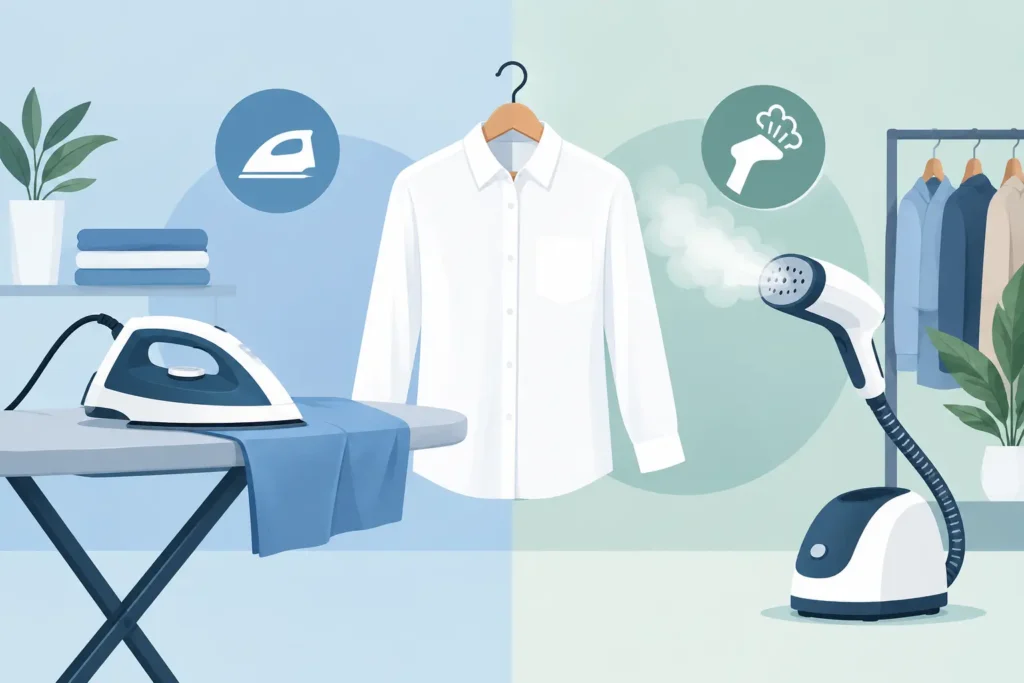
A crumpled shirt before a meeting, a creased dress just before dinner, or curtains that have lost their neat fall can make getting ready feel harder than it needs to be. The choice between ironing versus steaming is not simply about what is quickest. It affects how sharp your clothes look, how much pressure is put on the fabric, and how long a favourite garment stays in good condition.
Both methods have a place in everyday garment care. An iron creates a crisp, structured finish that suits many work and formal pieces. A steamer is gentler and convenient for refreshing clothes between wears. Knowing when to use each can save time while helping you avoid shine marks, stretched seams and heat damage.
Ironing versus steaming: the key difference
Ironing uses direct heat and pressure to flatten fibres. The soleplate sits against the garment, usually with steam added to relax stubborn creases. This produces a clean, precise result, particularly along collars, cuffs, pleats and trouser legs.
Steaming works differently. Hot vapour passes through the fabric without pressing directly onto it, relaxing fibres so wrinkles fall away. It is less about creating a sharp crease and more about restoring a smooth, fresh appearance with minimal handling.
Neither method is automatically better. The right choice depends on the fabric, the garment’s construction and the finish you want. A cotton business shirt generally benefits from ironing. A silk blouse, embellished dress or softly draped top may be safer with careful steaming.
When ironing gives the better finish
Ironing is the reliable choice when presentation needs to look crisp and deliberate. It is especially useful for office wear, school uniforms, linen garments and tailored pieces that rely on shape. A well-pressed collar frames a shirt properly, while a neat crease down tailored trousers can make the whole outfit look more polished.
Cotton and linen often respond well to ironing, although both may need a little moisture or steam to release deep creases. These natural fibres can wrinkle easily after washing, and a steamer may soften the wrinkles without fully smoothing the garment. For a freshly laundered linen shirt or cotton tablecloth, ironing usually provides the more finished result.
Ironing also gives you control. You can press a hem flat, restore pleats in a skirt or dress, and shape cuffs and collars. For garments worn in professional settings, that detail matters. The aim is not merely to remove wrinkles, but to give clothing a tidy, confident appearance.
That direct contact also creates risk when the iron is too hot or sits in one place for too long. Dark fabrics can develop a shine, synthetic fibres may melt or distort, and delicate trims can be damaged. Always check the care label, use the correct heat setting and turn darker garments inside out where appropriate. A pressing cloth provides another layer of protection for wool, silk and pieces with decorative details.
Fabrics that commonly suit ironing
Cotton, linen, denim and many durable blends can usually handle ironing at the temperature stated on their care labels. Wool can also be pressed carefully, but it should not be flattened aggressively. Use steam, a pressing cloth and a light touch to protect the surface and natural shape of the fibre.
Some items are best left to professionals even if they look as though they need an iron. Structured jackets, garments with bonded layers, formal dresses, beading, sequins, leather details or unusual finishes can react unpredictably to heat and pressure.
When steaming is the smarter option
Steaming is ideal when a garment needs a quick refresh rather than a sharp press. It works beautifully on hanging dresses, blouses, knitwear and lightly creased shirts. Because the steamer does not need to be pressed onto the fabric, it is often easier to use on garments with gathers, ruffles, draping or awkward shapes.
Delicate fabrics are where steaming can be particularly helpful. Silk, chiffon, velvet and some synthetic fabrics may mark, flatten or melt under a hot iron. Holding a steamer a short distance from the garment allows the fibres to relax with less direct stress. Keep the item on a sturdy hanger, move steadily from top to bottom and avoid soaking one spot with too much steam.
Steaming can also freshen an outfit between washes. Warm vapour helps release light odours and can revive the appearance of clothes that have been stored in a wardrobe or suitcase. It is useful before an event, after travel or when a jacket only needs a quick tidy-up.
However, steamers have limits. They are unlikely to create a sharp trouser crease, flatten a stubborn fold in heavy cotton, or give a collar the structure expected in formal business wear. A steamer is a convenient finishing tool, not a complete replacement for ironing.
Take care with heat-sensitive garments
A steamer may be gentler, but it is still hot. Avoid steaming leather, suede, waxed fabrics and anything with a coating unless the care label clearly allows it. Be cautious around glued embellishments, prints and plastic components. Steam can loosen adhesives or cause details to warp.
For velvet, steam from the reverse side or at a safe distance to lift wrinkles without crushing the pile. For silk, test an inconspicuous area first and keep the steamer moving. If the garment is sentimental, expensive or difficult to replace, professional care is the safer decision.
The finish you need should guide the choice
Think about the occasion before reaching for either appliance. If you are preparing a shirt for the office, trousers for a presentation or a tablecloth for guests, ironing is usually worth the extra time. The sharper lines hold their appearance better and give the garment a more tailored finish.
If you are getting ready for a weekend lunch, freshening a dress after travel or smoothing a blouse before leaving home, steaming is often enough. It is fast, gentle and well suited to clothes that are designed to drape rather than hold a structured shape.
For many households, the best approach is to have both options available. Use the steamer for quick touch-ups and delicate pieces, then reserve the iron for garments that require precision. This reduces unnecessary pressing and helps clothing maintain its texture and fit.
Common mistakes that shorten a garment’s life
The biggest mistake is treating every fabric the same. High heat may remove a crease quickly, but it can leave permanent damage behind. Polyester, acetate and other synthetics usually require low heat. Wool needs moisture and protection. Silk benefits from low heat and careful handling, if ironing is permitted at all.
Another common issue is ironing clothes that are completely dry and heavily creased. A light mist of water or the iron’s steam function can make pressing easier, reducing the temptation to use excessive heat. Make sure garments are clean before applying heat too. Heat can set some stains, making them harder to remove later.
Over-steaming can cause its own problems. Saturated fabric may take longer to dry, lose shape or develop water marks. Let steamed garments dry fully on a hanger before wearing or placing them back in the wardrobe.
Finally, do not ignore the care label because a garment looks straightforward. A simple-looking blouse may have a delicate lining, special coating or fibre blend that needs a more cautious approach.
When professional finishing makes sense
There are times when ironing or steaming at home adds another task to an already full week. Busy professionals may need several work shirts finished properly. Families may have school uniforms, formalwear and large laundry loads to manage. Commercial clients often need consistent presentation across linen, uniforms or staff garments.
Professional pressing provides an even finish without the guesswork of choosing temperatures, handling difficult fabrics or finding time at the ironing board. It is also valuable for special garments such as wedding dresses, eveningwear, tailored suits and items with delicate details. The right treatment considers the fabric, construction and care instructions rather than applying a one-size-fits-all method.
At Petal Fresh Dry Cleaners, garments are handled with the same care you would want for your own wardrobe, from a crisp business shirt to a delicate occasion piece. Collection and delivery make it easier to keep clothing fresh, pressed and ready for the moments that matter.
A good finish should make getting dressed simpler, not give you another chore. Choose ironing when your clothes need structure, steaming when they need a gentle refresh, and expert help when the fabric or occasion deserves extra care.